NATO

Nukes, NATO, and the Threat of War

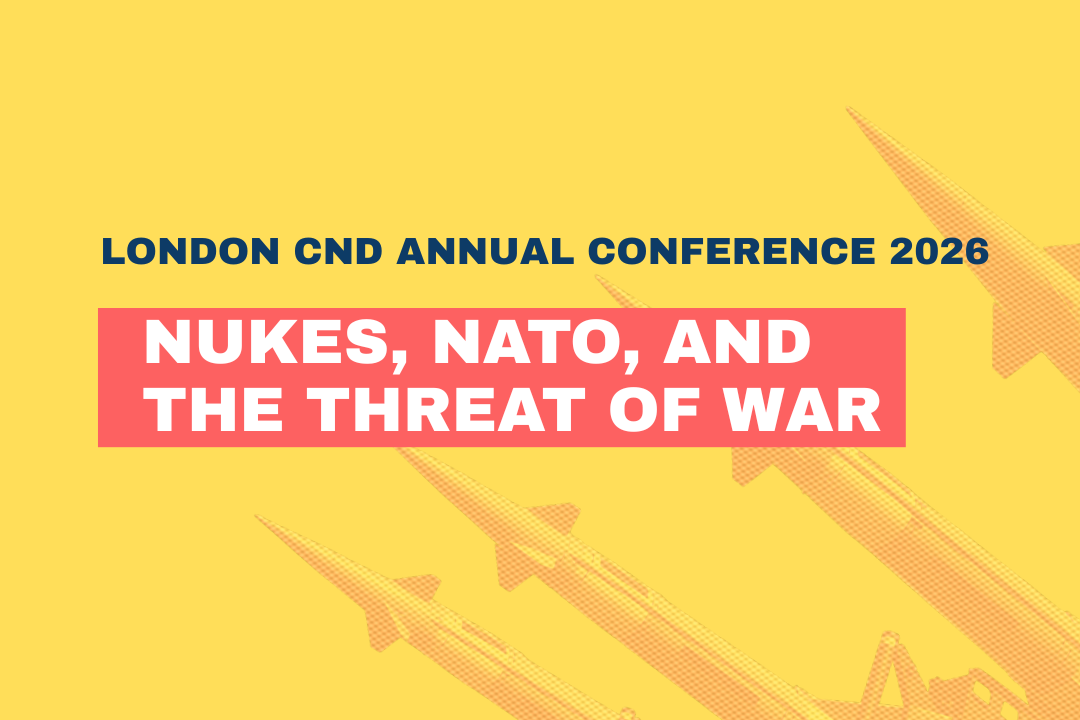
The drumbeat of war is growing louder in Britain, in Europe, and across the world. London CND’s annual conference on 25 January, Nukes Nato, and the Threat of War couldn’t be more important. An impressive line-up of speakers examined the threats in the year ahead – why politicians are preparing for war and what the alternatives are – and activists and members of London CND groups talked about their contributions to the growing resistance.

 In a keynote address, London MP Bell Ribeiro-Addy explored the relationship between racism and war. ‘The entire history of nuclear weapons,’ she said, ‘is a history of asymmetric power, double standards, and inequality.’  Bell argued:

‘The pathway to British security in a more multi-polar world is through disarmament, diplomacy, and demilitarisation abroad, and shoring up society at home through stable public services, energy independence, and industrial strategy.’

Melissa Parke, ICAN Director and a former member of the Australian senate described the importance of the Treaty on the Prohibition of Nuclear Weapons: Melissa pointed out:

‘Western nations have gone along with the so-called rules-based order for decades, lecturing other nations on human rights and democracy while looking the other way, or even worse participating with enthusiasm, in fiascos like Afghanistan and Iraq.’

Asad Rehman, Friends of the Earth UK Chief Exec talked about ‘the refusal to accept a world where we’re permanently balanced on the edge of annihilation’. Asah highlighted:

‘We are told nuclear weapons will keep us safe, while we know the reality is they threaten all life on earth. We are told endless military spending is unavoidable, yet we can’t find the money to stop the planet burning.’

Video clips of our other conference speakers are available on London CND’s YouTube channel.

A conference programme, including speaker bios, is available here, and you can watch the conference in full here.

No Wars, No Nukes - Carol Turner suggests a new year resolution for us all

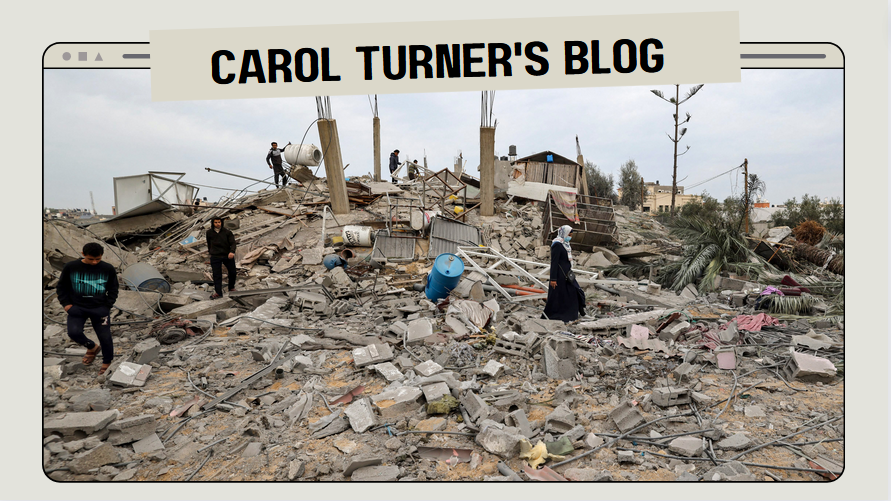
Only two weeks in, and 2024 is already looking bleak for anti-war and peace campaigners. Over 23,000 dead in Gaza, no resolution to the Ukraine war on the horizon, fighting in Sudan’s civil war continues, as does the long drawn-out conflict in Niger Delta, no let-up in the Saudi-led war in Yemen – and now the threat of action against Houthi solidarity attacks on commercial shipping as a US aircraft carrier steams towards the Red Sea…

 There are so many military engagements across the globe that most of them don’t even merit a mention in the western media. That’s not the case for campaigners with an internationalist perspective on peace and justice, with a big job ahead this year.

 London CND’s annual conference, No Wars No Nukes could prove a much needed dose of inspiration and determination, as well as practical inputs on what’s to be done, preparing us all for the solidarity struggles that lie ahead. As the name implies, the two keynote speakers and both panels are focussed on nuclear dangers facing Britain and the world, and on solidarity with the Occupied Territories as the prospect of regional escalation draws closer.


Prospects for the Occupied Territories

The humanitarian situation in Gaza is beyond bad. Restricted aid access means the risk of famine grows daily. At least one in four Gazan households face ‘catastrophic hunger’ according to the UN-backed IPC (Integrated Food Security Phase Classification). The destruction and damage to essential water, sanitation and health systems brings disease spreading among a weakened population. Prolonged diarrhoea, for example, puts children in particular at risk from death through malnutrition.

 There are no signs yet of any shift to a ‘less intense’ warfare strategy that Israel claims to be adopting. On the contrary, signs are growing that the conflict could spread across the region. Israel looks determined to pull Hezbollah into all-out confrontation. Its successful strikes on Hezbollah leaders in Lebanon and Iraq has resulted in a retaliatory drone attack on northern Israel with tens of thousands of Israelis being evacuated from the border.

 London CND’s keynote speech by Palestinian Ambassador Husam Zomlot sets the scene for a panel discussion, chaired by Murad Qureshi, with Raghad Altikriti, Muslim Association of Britain President, one of the six groups organising the mass mobilisations in Britain. She’s joined by Jenny Manson, a founder member of Jews for Justice for Palestinians and co-chair of Jewish Voice for Labour, and Sami Ramadani, Iraqi Democrats Against War and an anti-war voice in Britain for three decades.


Nuclear war clouds gathering

Bell Ribero-Addy MP, an outspoken Labour voice for Gaza and a Vice Chair of Parliamentary CND, kicks the conference off with a view from Westminster, followed by a panel on Nuclear War Clouds Gathering, with well-known climate change activist Samantha Mason, reflecting on the relationship between war and climate, and Cllr Emma Dent-Coad and myself reviewing the nuclear threats of 2024 and the role the anti-war movement can play in combatting them.

Most immediate and important to peace activists in Britain, is the return of US nukes to Lakenheath, part of NATO’s European nuclear forces; while the renewal this year of the decennial UK-US Mutual Defence Agreement is a good time to remind ourselves that nuclear weapons are at the centre of the so-called special relationship.

 NATO and Russia

The potential of the Ukraine war to stimulate a nuclear exchange between NATO and Russia is at the forefront of threats that confront us in 2024. Israel too is a  nuclear armed state, and the far right have already raised the possibility of using nuclear weapons in the Gaza conflict.

 Heritage Minister Amichai Eliyahu suggested in a radio interview reported in the Times of Israel that the nuclear option ‘was one way’ of dealing with Gaza. As unrealistic as it sounds to consider dropping a nuclear bomb on your own doorstep, Israel does have tactical nuclear weapons. Given IDF belligerence on Gaza, who’s to say a section of the Israeli leadership won’t consider threatening their use, or even using them, should Iran become an issue. What seemed like a hollow threat from a few Israeli government outliers last autumn, could be a step closer as the consequences spread across the Middle East and North Africa.


London CND’s annual conference takes place online Sunday 14 January, 12 noon to 2.30pm. Register in advance at http://tinyurl.com/NoWarsNoNukes

This blog first appeared in Labour Outlook 


Carol Turner is co-chair of London Region CND and a CND Vice Chair. She is a directly elected member of CND’s National Council and part of the International Advisory Group.

Carol is a long-time peace campaigner, a member of Stop the War Coalition’s National Officer Group, and author of Corbyn and Trident: Labour’s Continuing Controversy.


Ukraine: Voices for peace are raised across Europe

On the eve of Saturday’s Peace Talks Now demonstration in London, some readers may have watched the Ukraine war anniversary addition of the BBC’s Newsnight. One year on, a live audience of Ukrainian refugees gave their views and expressed their feelings about the war raging in their country. Who could fail but be moved by their concerns for the fate of their families and friends, the descriptions of what happened to their towns and neighbourhoods, and their hopes and fears for the future?

What struck me most of all, sending a chill down my spine, were the unreal expectations they expressed about the war’s likely end game. One woman’s desire for the war to continue until Putin was crushed and the Crimea and Donbass brought within Ukraine’s borders caused even Mark Urban to raise an eyebrow. The BBC’s Diplomatic Editor, no friend of Russia, felt obliged to highlight ‘the limits of western will’. Recently, he said, ‘it is explicit from the US, Germany, and France that they do not support the reconquest of Crimea.’

The responsibility for such expectations should be laid squarely at the door of the US and UK governments and their media allies whose war fever has encouraged Ukrainians to believe that outright victory and total defeat of Russia is not just possible but likely.

Calls for escalation point the way to war in Europe and beyond


In the run up to the 12-month anniversary, President Biden and Prime Minister Sunak have called loud and often for escalating the war in Ukraine. Most noticeably though, they have failed to match their war mongering words with concrete commitments to supply the tanks and aircraft President Zelenskiy is  seeking. Biden and Sunak recognise as we do that escalation is the road to war in Europe and beyond, with the possibility of nuclear war.

 The actual commitment Biden has made amounts to speeding up the provision of ammunition and imposing further sanctions. Sunak has pledged merely to ‘give serious consideration’ to Zelenskiy’s request for fighter aircraft. Even if aircraft were forthcoming, Sunak points out, it would take months, even years, before they were delivered and the Ukraine military trained to use them.

Behind the beat of western war drums a picture of US strategy begins to emerge – that of embroiling Russia in a long and protracted war which drains the country’s military, economic, and political resources; hoping a weakened Putin will be thrown to the wolves by the Russian people to be replaced by a more malleable leader. Needless to say, such a strategy takes little if any account of the war’s impact on the Ukrainian people. Nor does it acknowledge the possibility that, in extremis, nuclear. weapons might be used.

Nuclear powers must avert those confrontations which bring an adversary to a choice of either a humiliating retreat or a nuclear war
— John F. Kennedy

Compare the rhetoric of Biden and Sunak, with a speech by President John F Kennedy in 1963, a year on from the Bay of Pigs and just weeks before his assassination. ‘Above all,’ Kennedy said, ‘nuclear powers must avert those confrontations which bring an adversary to a choice of either a humiliating retreat or a nuclear war. To adopt that kind of course in the nuclear age would be evidence only of the bankruptcy of our policy—or of a collective death-wish for the world.’

Disregard for the fate of the peoples and countries in whose name the US and its allies claim to act can be seen in a long line of recent wars – in Yugoslavia in the 1990s, in Afghanistan in 2001, in Iraq in 1991 as well as 2003, in Syria, and in Libya. All of them have left a trail of death and destruction from which each still suffers. This is the real lesson of 21st century wars.

The outcome of a prolonged war in Ukraine is not self-determination, as a few voices in the UK peace movement misguidedly imagine when they support Biden and Sunak’s calls to step up the war. The only way forward is peace talks.

Backing the calls to step up the war, however unintentional, provide a progressive gloss for warmongering and profiteering

In backing escalation, however unintentional, these tragically mistaken voices provide a progressive gloss for warmongering and profiteering. The same voices would never be raised in support of the Tories austerity agenda. Why would anyone imagine Johnson, Truss and Sunak have changed their spots when it comes to Ukraine?

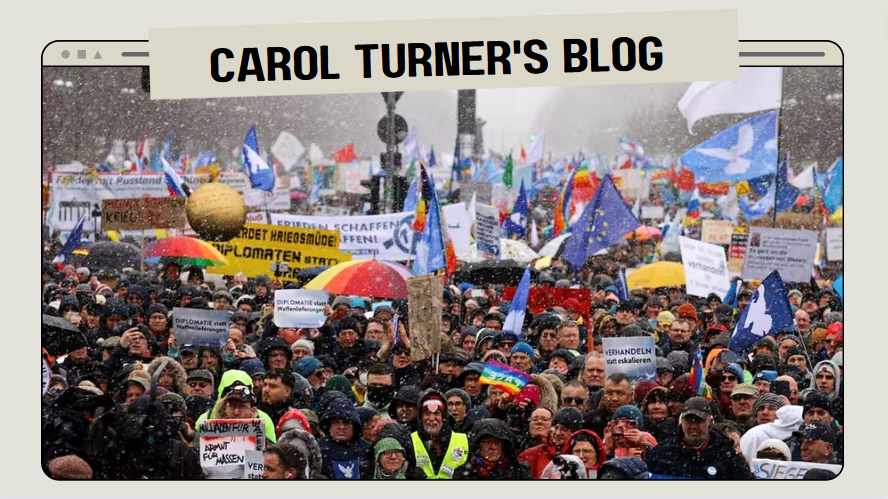
On Saturday 25 February 2023, led by the Campaign for Nuclear Disarmament and Stop the War Coalition, the peace movement took to the streets of London to mark the first anniversary, demanding End War in Ukraine! Peace Talks Now! The same demands to stop the war and build the peace are ringing out across Europe – in Italy, Spain, Germany, Switzerland, Croatia, Portugal, Austria, France, Brussels, Poland, the Netherland, and beyond.

CND is part of a growing movement across Europe. Every single one of us who marched on Saturday can be proud that our voices were raised for sanity, for the future of Ukraine, and for the future of the human race. When history is written, and the miasma of rhetoric and lies forgotten, our stand will be a small footnote on history’s pages. That is something we should all be justly proud of.


Carol Turner is co-chair of London Region CND. She is a directly elected member of CND’s National Council and part of the International Advisory Group.

Carol is a long-time peace campaigner, a member of Stop the War Coalition’s National Officer Group, and author of Corbyn and Trident: Labour’s Continuing Controversy.