Trump's finger on the nuclear button: Report from London CND 2019 conference

Photo: Henry Kenyon

Photo: Henry Kenyon

Last Saturday, CND supporters from across London gathered for our annual conference - this year taking the theme ‘Trump’s finger on the Nuclear Button.’

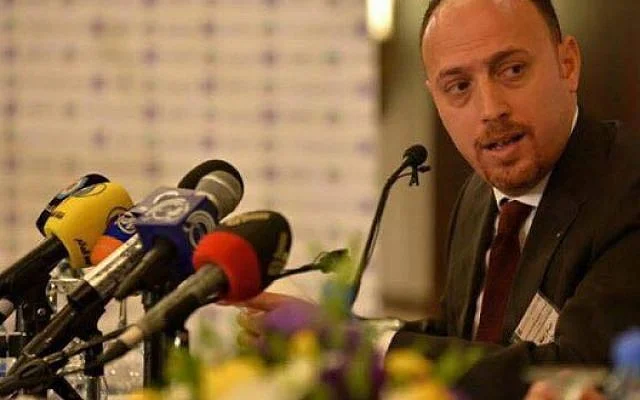
We were honoured to be joined by Ambassador Husam Zumlot, head of the Palestinian mission in Washington until President Trump closed it down. The Ambassador gave fascinating insights into the challenges facing those who seek a peaceful solution to the Israel-Palestine conflict, and what the Trump administration’s policies mean for the region. We also heard from Catherine West on the UK Parliament’s response to the Trump administration, and from Ann Feltham from the Campaign Against the Arms Trade on the importance of ending arms sales to Saudi Arabia.

After the first session we crossed the Atlantic, with a video interview with Medea Benjamin from Code Pink USA, a women-led organisation opposing war and militarism. She told us about the varied tactics Code Pink uses - from traditional protest marches to inventive publicity stunts and educational programmes - and said she hoped to work more closely with the UK peace movement in the months and years ahead.

You can watch the video interview here

You can watch the video interview here

Our second plenary featured Dr Rebecca Johnson from the Acronym Institute, London CND Chair Carol Turner, and Rae Street, Vice-Chair of CND UK. The guests discussed the trashing of international treaties - such as Trump’s intention to pull out of the Intermediate-Range Nuclear Forces Treaty, first signed in 1987 between the US and Russia. We heard about the importance of international agreements like the in building towards a nuclear-free world.

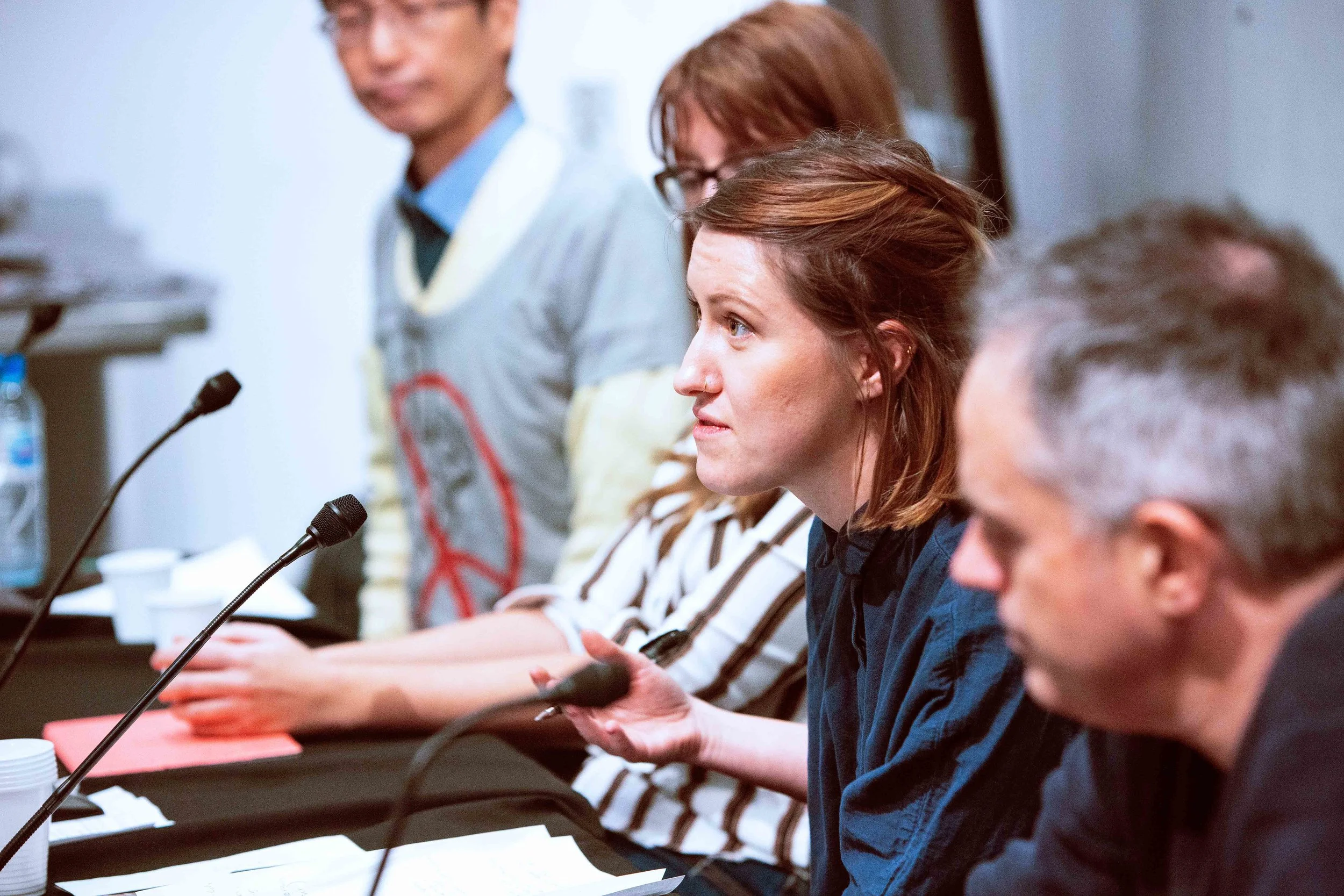
SOAS CND chair Nobu Ono speaking at the conference. Photo: Henry Kenyon

SOAS CND chair Nobu Ono speaking at the conference. Photo: Henry Kenyon

In the final plenary - ‘Think Global, Act Local’ - our speakers tackled the challenge of how to take concrete action as campaigners and communities to build this world. Sara Medi Jones, acting CND General Secretary, spoke about CND’s current campaigns; Nobu Ono told us about the work he’s been doing running SOAS CND, and the challenges and opportunities in youth and student activism. Green Party co-leader Jonathan Bartley left us with a message of hope: that we are living through times of intense change, in which the old political order is breaking apart - and we have the opportunity to build something new.

London CND vice-chair Hannah Kemp-Welch chairs the final panel of the day. Photo: Henry Kenyon

London CND vice-chair Hannah Kemp-Welch chairs the final panel of the day. Photo: Henry Kenyon

You can see all the photos from the conference here.


Women against Trump: video interview with Code Pink's Medea Benjamin

At our annual conference on the 12th January, titled ‘Trump’s Finger on the Nuclear Button’, we were lucky enough to carry out a video interview with Medea Benjamin from Code Pink USA, a women-led anti-war organisation. Watch it here!


Trump Is Giving Palestinians a Choice. We’ll Choose Dignity.

By Husam Zomlot

This piece first published in the New York Times, Sept. 25, 2018

RAMALLAH, West Bank — My family and I moved to Washington in April 2017, just a few months after President Trump took office. I’d been sent as the head of the Palestine Liberation Organization’s general delegation to the United States — effectively the Palestinian ambassador in Washington.

At the time, the new administration said it wanted to forge a comprehensive and lasting peace in the Middle East. This seemed like a long shot given Mr. Trump’s positions and his close association with some of Israel’s most extreme American supporters. Still, we Palestinians wanted to give this effort a chance.

One of my first tasks was preparing for a visit in May by the Palestinian president, Mahmoud Abbas. My team and I began to meet with officials at the White House, the State Department and Congress. We also held encouraging meetings with universities, churches, think tanks and the news media, in which I saw how American opinions are changing on the Palestinian struggle for freedom and independence.

At the same time, my family began to get used to our new home. My son, Saeed, then 6, and my 5- year-old daughter, Alma, began school. My wife, Suzan, who trained as a biomedical scientist, took time off as our children adjusted to their new life and I started my demanding job. In no time, we all made many wonderful American friends. It was a hopeful new beginning.

A few months later, things changed radically. Although our relationships with the American people — including the American Jewish communities — were growing, political ties with the Trump administration deteriorated. In December, President Trump announced the United States’ recognition of Jerusalem as Israel’s capital and his intention to move the American Embassy in Israel there. By that point, it had become clear that the White House was fully embracing the right- wing Israeli agenda.

The situation has gotten even worse since. In May, the United States officially moved its embassy from Tel Aviv to Jerusalem, at which point I was recalled by Mr. Abbas to the occupied West Bank, where I remain. More recently, the Trump administration has taken even more pointless and vindictive steps toward the Palestinian people. In August, the White House decided to defund the United Nations agency that helps Palestinian refugees. The effort to punish the Palestinians continues. The administration appears intent on cutting off all aid, even to hospitals.

I haven’t been spared this vindictiveness. This month, the administration ordered the closing of the Palestinian mission in Washington, my office. And it has announced that it plans to revoke my family’s visas by Oct. 10.

We are in the middle of a political and diplomatic crisis. I resent, of course, the toll this is taking on my family. But as a diplomat, I can see the upside. This situation presents three strategic opportunities.

First, it frees the Palestinians from the shackles of a failed 27-year-old, American-led peace process, unleashing more of our energy to work with the international community. At our invitation, dozens of countries will attend a meeting in New York this week to discuss restarting international peace efforts.

Second, it provides an opportunity to correct the American-Palestinian bilateral relationship. In 1987, Congress designated the P.L.O. as a terrorist organization. This law, among others, contributed to the United States’ failure as a mediator. Despite the American-sponsored Madrid peace conference in 1991, the signing of the Oslo accords at the White House in 1993, the numerous bilateral agreements and generous American aid program, this label was never removed. We know this process drags on — Nelson Mandela was officially classified as a terrorist by the United States until 2008 — but it’s time to do so. Our diplomatic mission in Washington must be reopened only once this law is repealed.

Third, this crisis will help redirect Palestinian attention away from just high-level American officials and toward an equally, if not more, important investment: long-term engagement directly with the American people. American public opinion, especially among young people, is shifting toward supporting peace and Palestinian rights.

My family left the United States a few days ago. While as a father I am dismayed that my children had to change schools three times in one year, as an ambassador I feel a sense of national fulfillment. The Trump administration has given us a choice: Either we lose our rights or we lose our relationship with this administration. We took the choice that any dignified people would have taken.

Peace is never about extortion, coercion or blackmail. It is about vision, leadership, trust and investment. The Trump administration lacks all of those. In seeking liberation from the Israeli occupation, which steals our land and denies us our most basic human rights, we are demanding no more than what Americans would demand for themselves: freedom, liberty and equality.

I’m not sure when I will be back in the United States. I’ll miss all of the great people I met there. But even in my short time there, it was clear that there is much hope for peace and justice. I am confident the United States will one day restore commitment to the legitimate rights and aspirations of the Palestinian people. I hope that day will come soon.

Husam Zomlot (@hzomlot) is the strategic affairs adviser to President Mahmoud Abbas.