
What keeps Britain safe?
The long-delayed Defence Investment Plan is promised before this year’s Nato summit opens in Ankara on 7 July. John Healey claimed Britain’s growing military budget – including plans for even steeper rises in future – was failing to keep Britain safe, when he resigned recently as Defence Secretary. This will be challenging for Makerfield’s new MP Andy Burnham, or any other candidate to replace Keir Starmer who resigned recently. Labour’s success in defeating Reform in Makerfield cannot be maintained if the new PM holds fast to increases in military spending at the expense of wealth redistribution and productive investment.
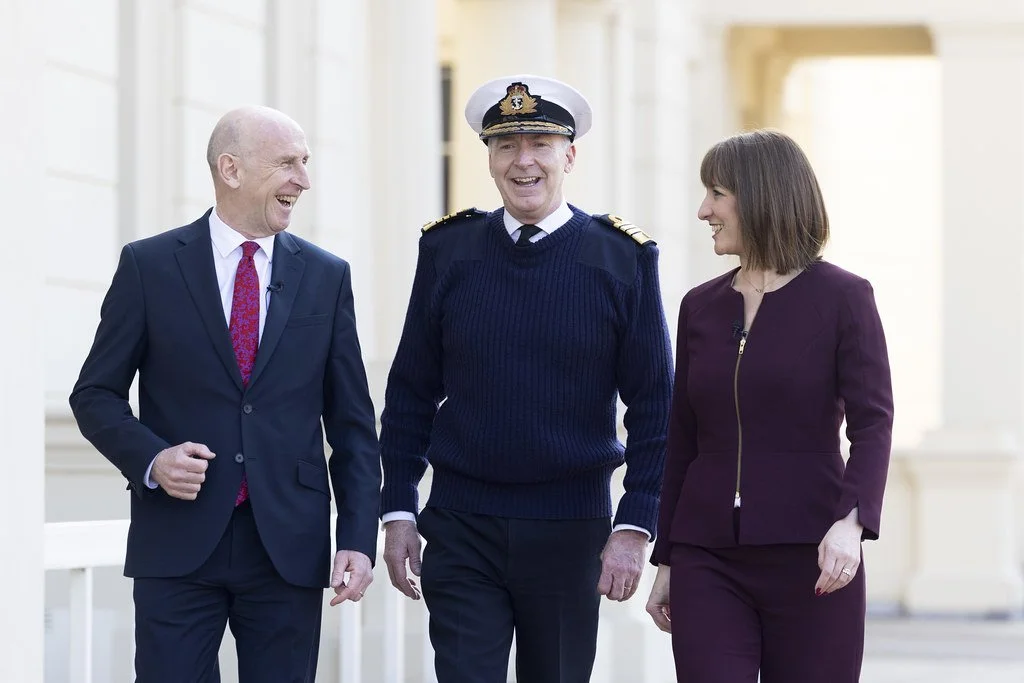
Former Defence Secretary John Healey (left) with Chancellor Rachel Reeves (right) following a £2.2bn increase in defence spending in last years spring budget.
As CND’s response to Healey’s resignation highlights, ‘British military spending in real terms is now actually higher than during the Cold War’. SIPRI, the Stockholm International Peace Research Institute, shows the UK military budget is 32% higher now than it was in 2016. This decision to upgrade the Trident submarine fleet, taken in 2007, added £41 billion to Britain’s military budget.
Britain’s nuclear weapons programme currently accounts for 14% of the MoD’s budget. UK nuclear weapons spending is rising rapidly. Britain’s nuclear weapons programme has expanding beyond Trident, with long-term implications for military spending.
At the beginning of 2025, we learned Rishi Sunak had agreed to the return of US nuclear weapons to Britain, which have now arrived at RAF Lakenheath. Last year Starmer promised to purchase 12 nuclear-capable US fighter jets. They will be housed at nearby RAF Marham to be deployed as part of the Nato mission. The direct costs of purchasing them will be around £1 billion, with additional cost incurred by Britain for infrastructure upgrades, personnel training, maintenance, and air traffic control integration.
From the spiralling cost of living in the global north, to famine, disease, health crises, and water shortages in the global south, the global majority are facing a bleak future. The war drive by governments like Britain’s makes this worse not better.
The expansion of Britain’s nuclear weapons programme and the return of US nuclear weapons to the UK do not represent the best interests of the majority. Not only do they push up Britain’s bloated military budget - more importantly they making the UK and all of its people a target.